LucidTrust AI Governance Platform

AI governance does not happen in one place. It starts with visibility, moves through risk review and approval, continues through vendor and model monitoring, and needs to produce evidence whenever leadership, auditors, regulators, or customers ask for proof.
LucidTrust brings those workflows together in one platform so teams can manage AI oversight as adoption grows and changes.
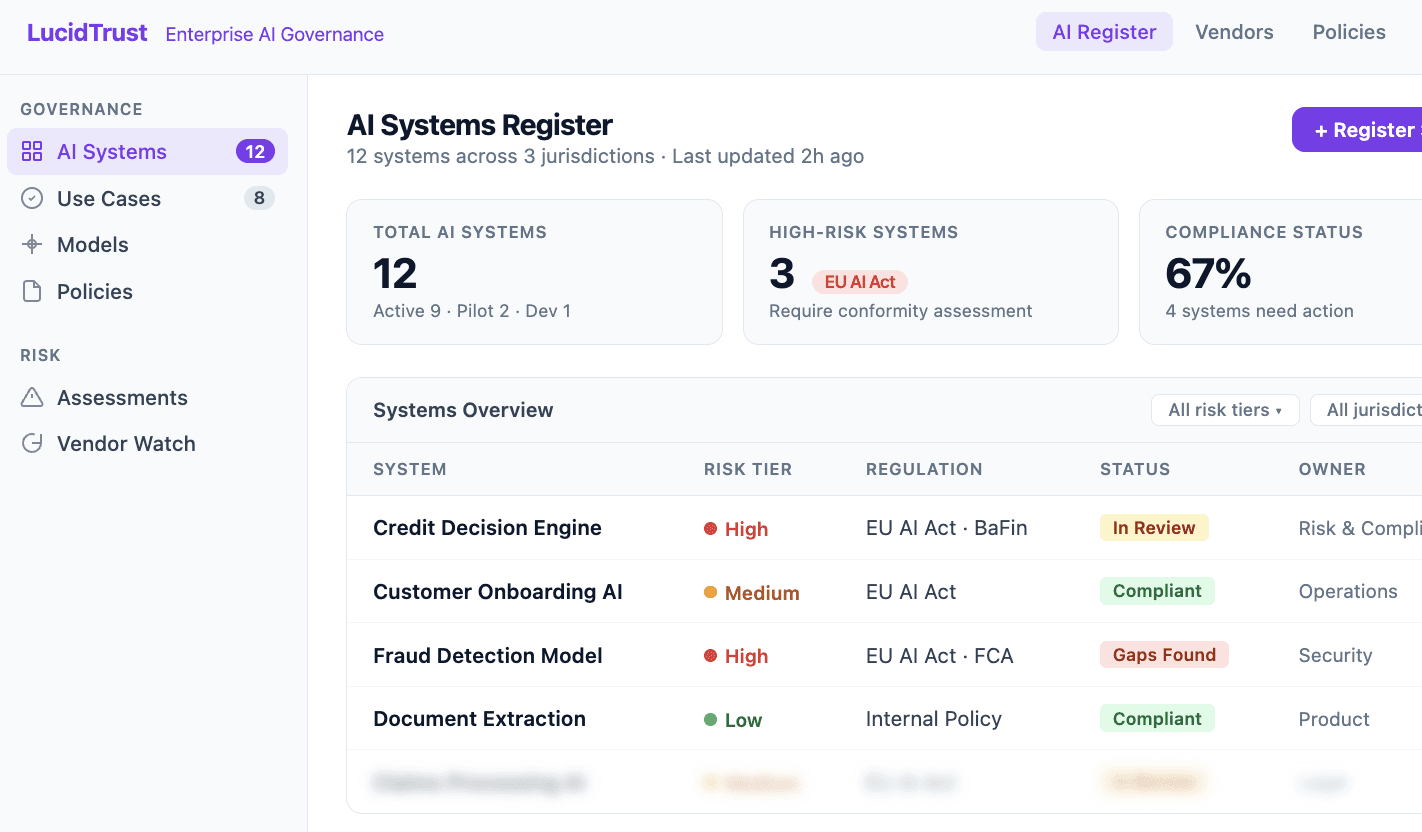
AI Inventory & Discovery
Discover and maintain a living register of AI systems, vendors, models, agents, use cases, owners, data categories, risk tiers, and approval status.
Use AI Inventory & Discovery to understand what AI exists across the business, where it is being used, who owns it, what data it touches, and what level of review it requires.
Explore AI Inventory & Discovery

AI Vendor Monitoring
Monitor third-party vendors for new AI features, model updates, data policy changes, default setting changes, and other signals that may affect your risk profile.
Use AI Vendor Monitoring to keep vendor oversight current after onboarding, as AI capabilities, policies, and product behavior evolve.
Explore AI Vendor Monitoring

AI Vendor Due Diligence
Assess AI vendors in seconds with automated AI feature discovery, risk insights, use cases, data privacy, security, and governance information.
Use AI Vendor Due Diligence to support new vendor review, AI-enabled software assessment, procurement intake, security and privacy review, third-party risk management, and governance committee decisions.
Explore AI Vendor Due Diligence

AI Use Case Governance
Standardize how AI use cases are submitted, assessed, approved, monitored, and documented across the business.
Use AI Use Case Governance to evaluate business purpose, data sensitivity, customer impact, regulatory exposure, and required controls before AI moves into production or broader use.
Explore AI Use Case Governance

AI Agent Governance
Govern autonomous and semi-autonomous AI agents with visibility into purpose, permissions, data access, actions, owners, controls, and escalation paths.
Use AI Agent Governance to understand what agents can do, where they operate, what systems they touch, and how human oversight is applied.
Explore AI Agent Governance

Model Inventory & Risk
Track internal and third-party models with structured records for ownership, purpose, data inputs, risk attributes, validation status, monitoring requirements, and governance history.
Use Model Inventory & Model Risk Management to connect model oversight to broader AI governance, vendor risk, compliance, and audit-readiness workflows.

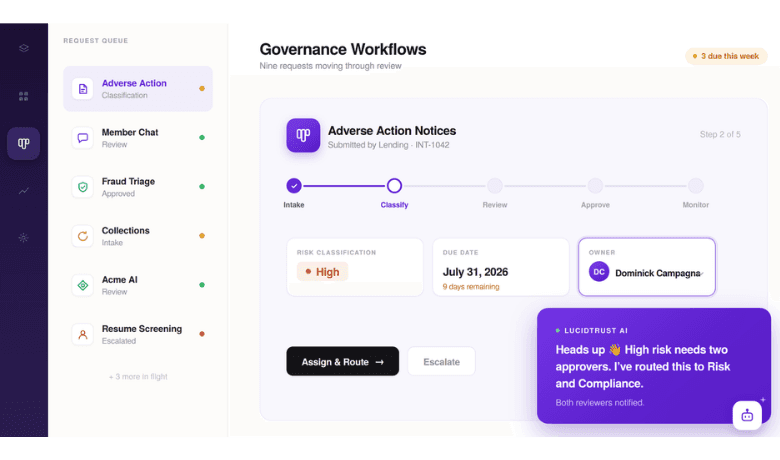
AI Governance Workflows
Standardize AI intake, risk classification, review, approval, escalation, exception handling, and post-deployment follow-up.
Use AI Governance Workflows to move AI requests through a consistent process across risk, compliance, legal, privacy, security, IT, and business teams.
Explore AI Governance Workflows
Audit-Ready Reporting
Turn AI inventory records, vendor alerts, workflow activity, approvals, exceptions, and follow-up actions into evidence.
Use Audit-Ready Reporting to support board updates, customer diligence, audits, exams, and internal governance reviews.
Explore Audit-Ready Reporting

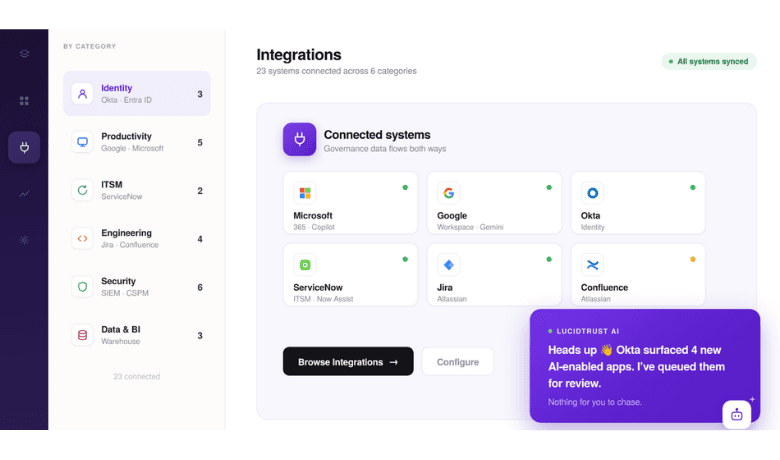
Integrations
Connect AI governance to the systems where vendor data, ownership, documentation, tickets, identity, and operational workflows already live.
Use Integrations to reduce manual follow-up and keep governance connected to the way your organization already works.
Explore Integrations